b. February 8th, 1928 in Belzoni (Mississippi)
d. December 13th, 2012 in Detroit (Michigan)
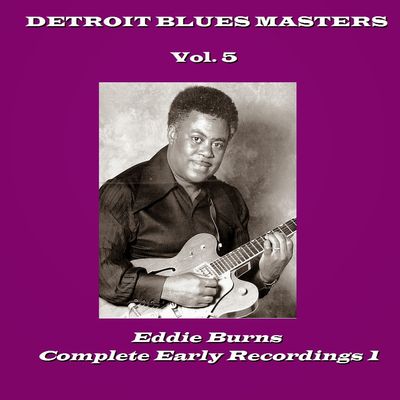
DETROIT BLUES MASTERS vol.5 : COMPLETE EARLY RECORDINGS
Blue Eye blog (only on mp3)
1949 - May 1961

DETROIT BLUES MASTERS vol.6 : COMPLETE EARLY RECORDINGS
Blue Eye blog (only on mp3)
1963 - May 1975
Ainé de neuf enfants, Eddie apprend le blues avec son père, un musicien des medicine-shows, bien qu'il soit élevé par ses grands parents. Influencé par John Lee "Sonny Boy" Williamson, il apprend l'harmonica en écoutant ses disques. A la recherche de meilleures opportunités, il s'installe quelques temps à Clarksdale puis pose ses valises à Detroit en 1948. Eddie devient rapidement un des bluesmen importants de la scène de la ville, gravitant autour de Hastings Street aux côtés de John Lee Hooker (les deux hommes joueront et enregistreront souvent ensemble). Il grave ses premiers morceaux en 1949 pour le label Palda. Sous l'égide du producteur Joe Van Battle, il enregistre de superbes morceaux (parfois en compagnie de Hooker) : "Making a fool out of me", "Where did you sleep last night", "Gangster blues", "Squeeze me baby". Malheureusement, ces titres, qui semblent avoir été vendus au label Gotham, ne verront pas la lumière du jour. Il faudra attendre 1987 pour qu'un LP Krazy Kat ne les exhume ("Detroit Blues 1950-1951"). D'abord harmoniciste, Eddie joue aussi de la guitare qui va progressivement devenir son instrument principal. Toujours basé à Detroit, il enregistre pour Deluxe ("Dealing with the devil"), Kent ("She keeps me guessing") et même Checker ("Biscuit baking mama") tout en exerçant son métier de mécanicien. De nouveau sous la supervision de Van Battle, Eddie grave les superbes "Treat me like I treat you" et "Dont'cha leave me baby" en 1957. Ces deux morceaux seront revendus à Chess. Au début des années 60, il travaille pour les labels Harvey (l'excellent "Orange driver" pour le label d'Harvey Fuqua) et Von. En mai 1966, Eddie accompagne John Lee Hooker lors d'une célèbre séance pour Chess (qui débouche sur l'album "The real folk blues"). Durant celle-ci, il trouve l'opportunité de graver un morceau en leader, le remarquable "Jinglin' baby". Une oeuvre de premier plan par un des meilleurs bluesmen issu de la scène de Detroit rassemblée par Gérard Herzhaft sur son blog. On trouve aussi les titres qu'Eddie a gravé en Angleterre dans les années 70 pour Jim Simpson.
The eldest of nine children, Eddie learned the blues from his father, a medicine-show musician, even though he was raised by his grandparents. Influenced by John Lee "Sonny Boy" Williamson, he learned the harmonica by listening to his records. Seeking better opportunities, he settled briefly in Clarksdale before moving to Detroit in 1948. Eddie quickly became a key figure on the city's blues scene, active around Hastings Street alongside John Lee Hooker (the two men would often perform and record together). He cut his first tracks in 1949 for the Palda label. Under the guidance of producer Joe Van Battle, he recorded superb songs (sometimes accompanied by Hooker) such as "Making a fool out of me", "Where did you sleep last night", "Gangster blues", "Squeeze me baby". Unfortunately, these tracks, which appear to have been sold to the Gotham label, were never released. It was not until 1987 that a Krazy Kat LP ("Detroit Blues 1950-1951") finally unearthed them. Although initially a harmonica player, Eddie also played guitar, an instrument that gradually became his primary one. While continuing to work as a mechanic, he remained based in Detroit and recorded for Deluxe ("Dealing with the devil"), Kent ("She keeps me guessing"), and even Checker ("Biscuit baking mama"). Once again under Van Battle's supervision, Eddie recorded the excellent "Treat me like I treat you" and "Dont'cha leave me baby" in 1957, both tracks were subsequently sold to Chess. In the early 1960's, he worked for the Harvey label (recording the excellent "Orange driver" for Harvey Fuqua's imprint) and Von. In may 1966, Eddie accompanied John Lee Hooker during a famous session for Chess (which resulted in the album "The real folk blues"). During this session, he found the opportunity to record a track as a leader : the remarkable "Jinglin' baby". It is a standout work by one of the best bluesmen from the Detroit scene showcased by Gérard Herzhaft on his blog. Also included are the tracks Eddie recorded in England during the 1970's for Jim Simpson.
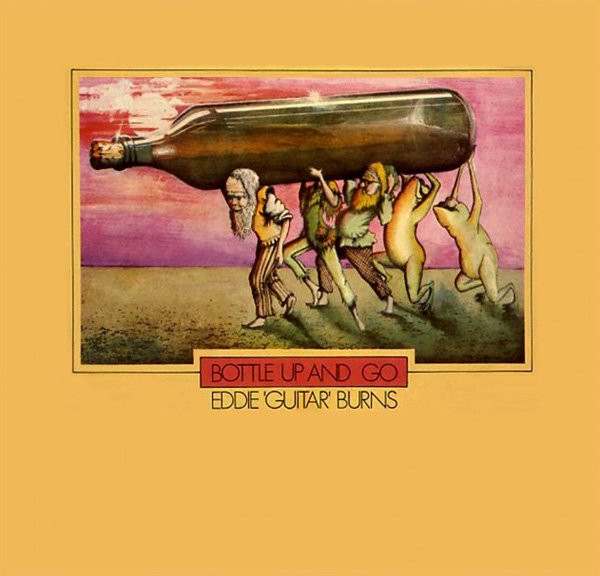
BOTTLE UP AND GO
Action
Big Bear
February 1972
Dès la fin des années 60, Eddie se retrouve dans le creux de la vague et peine à trouver des engagements. Par chance, il est repéré par le producteur anglais Jim Simpson qui l'invite pour une tournée en Angleterre. Durant celle-ci, il grave cet album aux Chalk Farm Studios de Londres. Bien accompagné par des musiciens anglais, il délivre un bel album avec des titres accrocheurs comme "She's in L.A.", "Cross your heart" ou "Your daddy ain't foolin'" (dans lequel il joue de l'harmonica). Sur quatre morceaux, Eddie joue seul à la guitare ("Detroit women", "Whisky headed woman").
By the late 1960's, Eddie was going through a rough patch and struggling to find work. Fortunately, he was spotted by british producer Jim Simpson who invited him to tour England. During the tour, he recorded this album at Chalk Farm Studios in London. Backed by a fine backing band of british musicians, he delivered a nice album featuring catchy tracks like "She's in L.A.", "Cross your heart" or "Your daddy ain't foolin'" (on which he plays harmonica). On four tracks, Eddie is alone on guitar ("Detroit women", "Whisky headed woman").
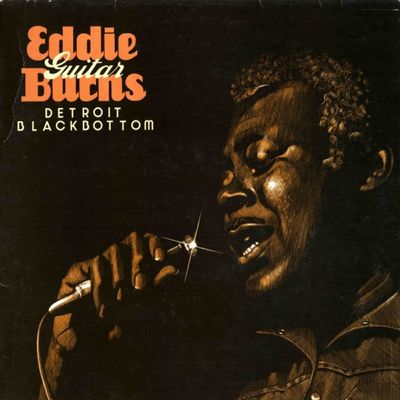
DETROIT BLACK BOTTOM
Big Bear
November 1972

Peu après "Bottle up and go", Eddie Burns est, de nouveau, invité par le producteur anglais Jim Simpson pour un nouvel album. Il y a, autour d'Eddie, des arrangements de cuivres et de choeurs qui semblent un peu lourds. Un programme inégal et hétérogène avec des moments intéressants comme "Do it if you wanna", "I've got a lot of respect", "Bull head go ahead Angie".
Shortly after "Bottle up and go", Eddie Burns was once again invited by british producer Jim Simpson to record a new album. The arrangements surrounding Eddie — featuring horns and backing vocals — feel somewhat heavy-handed. It is an uneven, heterogeneous collection, though it includes interesting moments such as "Do it if you wanna", "I've got a lot of respect", "Bull head go ahead Angie".
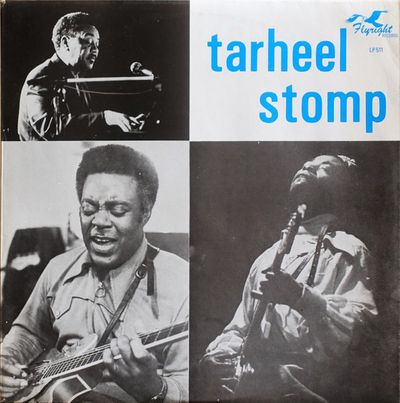
TARHEEL STOMP
Flyright
March 1973
Sur cette anthologie, on trouve une version live de "Bottle up and go" avec Eddie jouant seul à la guitare.
This anthology features a live version of "Bottle up and go" with Eddie playing alone on guitar.
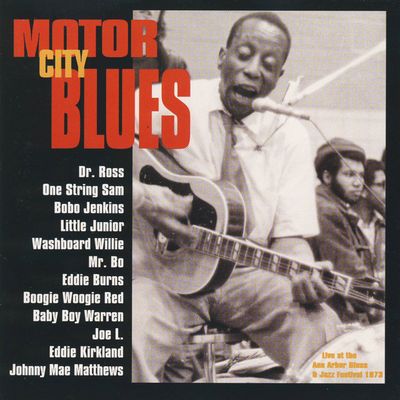
MOTOR CITY BLUES
Total Energy
September 1973
Sur la scène du célèbre festival d'Ann Arbor, Eddie joue deux superbes morceaux : "I call it love" et "Better watch what you're doing".
On the stage of the famous Ann Arbor festival, Eddie plays two superb tracks : "I call it love" and "Better watch what you're doing".
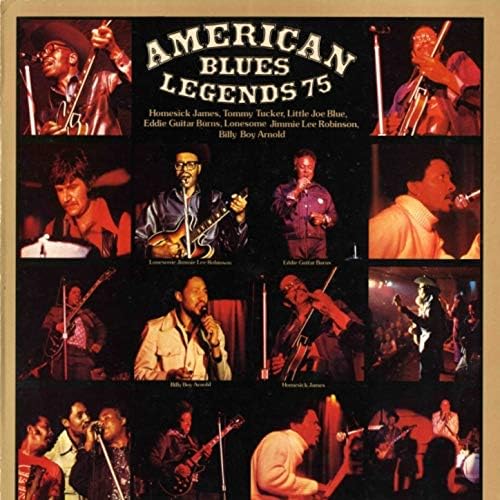
AMERICAN BLUES LEGENDS '75
Big Bear
May 1975
Familier des tournées anglaises, Eddie participe à l'American Blues Legends organisé par le producteur Jim Simpson. Il donne notamment une vigoureuse version de "Biscuit bakin' mama" et le slow blues "Bury me back in the USA".
A seasoned veteran of english tours, Eddie took part in the American Blues Legends package tour organized by producer Jim Simpson. He notably delivered a powerful version of "Biscuit bakin' mama" and the slow blues "Bury me back in the USA".
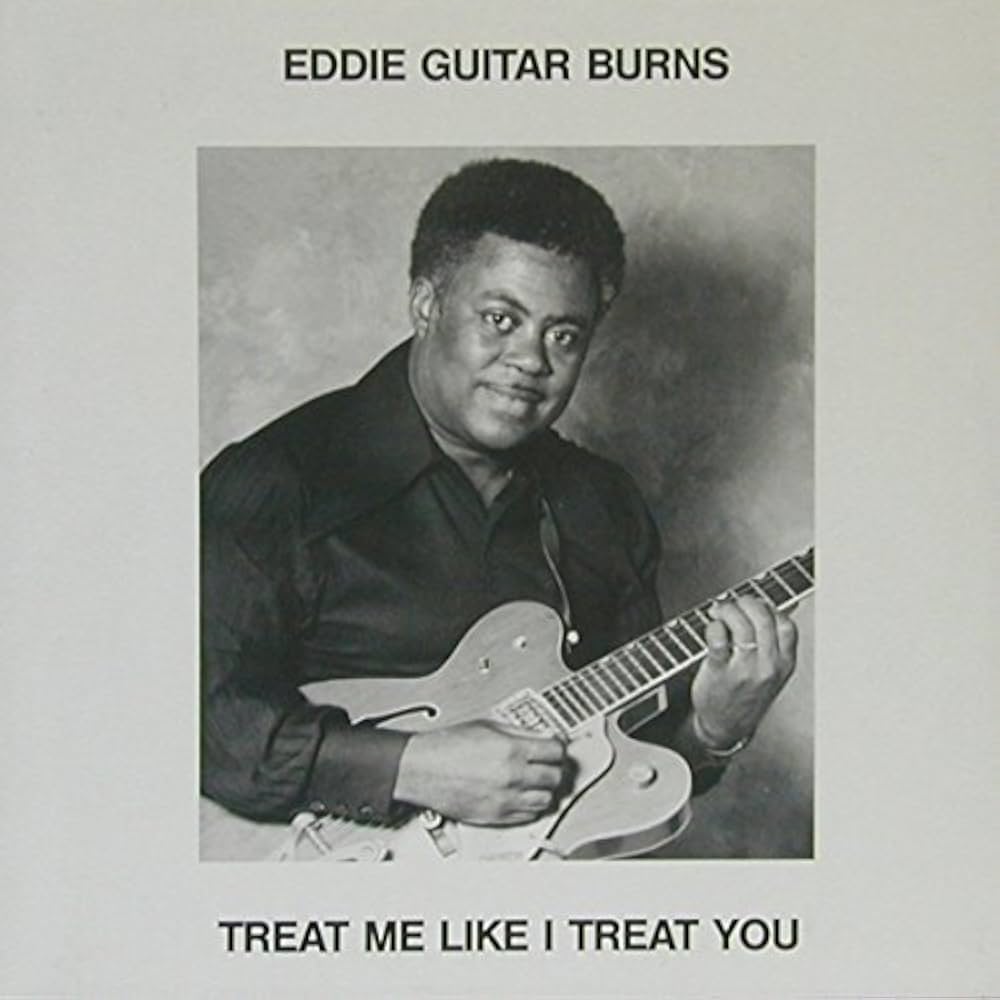
TREAT ME LIKE I TREAT YOU
Moonshine
June 1982
Ce microsillon hollandais compile ses premiers morceaux de la fin des années 40 jusqu'au début des années 60. On trouve aussi deux morceaux inédits issus d'une séance organisée à Detroit par Eddie et Joe Hunter dans un inhabituel style Soul-Blues.
This dutch LP compiles his early tracks from the late 1940's through the early 1960's. It also includes two previously unreleased tracks from a session organized in Detroit by Eddie and Joe Hunter in an unusual soul-blues style.
CHICAGO BLUES FESTIVAL '86
Black & Blue
LONESOME FEELING
Black & Blue
November 1986
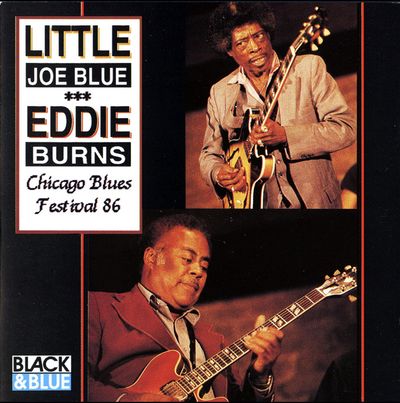
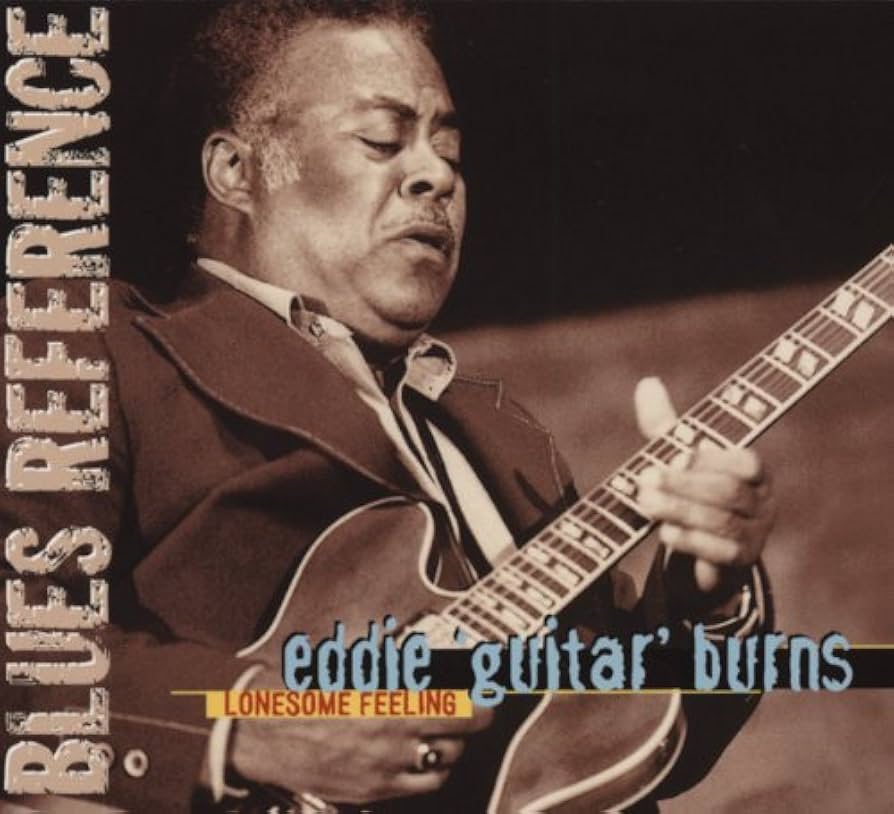
Eddie participa à la tournée du Chicago Blues Festival en 1986 partageant l'affiche avec Little Joe Blue. Un album studio fut enregistré avec les musiciens de la tournée (Billy Branch, Melvin Taylor, Nick Charles, Julian Vaughn) sous la supervision de Didier Tricard et Martin Van Olderen. Une séance intéressante, quoiqu'un peu routinière, qui mérite tout de même l'écoute. On peut retenir, en particulier, les slow blues "Lonesome feeling", "You got to love me with a feeling", "New inflation blues". Cinq morceaux inédits furent ajoutés sur la réédition CD parue en 2002.
Eddie took part in the 1986 Chicago Blues Festival tour sharing the bill with Little Joe Blue. A studio album was recorded with the tour's musicians (Billy Branch, Melvin Taylor, Nick Charles, Julian Vaughn) under the supervision of Didier Tricard and Martin Van Olderen. It was an interesting, albeit somewhat routine, session that is nonetheless worth a listen. Standout tracks include the slow blues numbers "Lonesome feeling", "You got to love me with a feeling", "New inflation blues". Five previously unreleased tracks were added to the CD reissue released in 2002.
DETROIT BLUES FACTORY vol.1
Blues Factory
1987
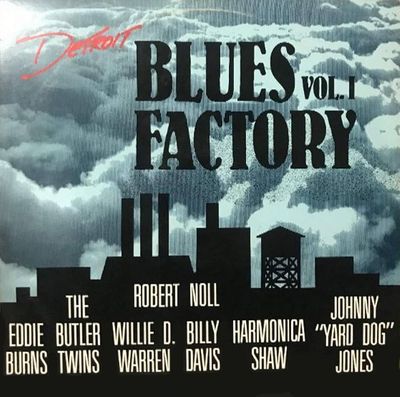
On trouve dans cette anthologie, consacrée aux bluesmen de Detroit, un bon titre d'Eddie : "Don't let money change you".
This anthology, dedicated to Detroit bluesmen, includes a good track by Eddie : "Don't let money change you".
DETROIT
Blue Suit
Evidence
1989
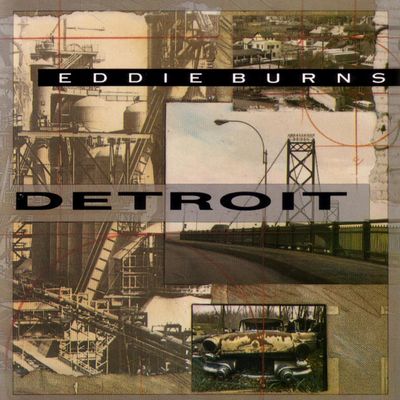
Dans ce superbe album, on retrouve Eddie Burns en leader d'un solide groupe (Joe Hunter, Frank Bryant, Bobby Smith). Il propose des blues accrocheurs comme "Orange driver", "When I get drunk", "Inflation blues", "Detroit" (un démarquage de "Sweet home Chicago). On le trouve aussi en mode acoustique sur trois morceaux (dont l'excellent "New highway 61" et une convaincante reprise de "Boom boom") et à l'harmonica sur deux titres.
On this superb album, Eddie Burns fronts a solid backing band (Joe Hunter, Frank Bryant, Bobby Smith). He delivers catchy blues tracks such as "Orange driver", "When I get drunk", "Inflation blues", "Detroit" (a reworking of "Sweet home Chicago"). He also appears in an acoustic setting on three tracks (including the excellent "New highway 61" and a convicing cover of "Boom boom") and plays harmonica on two songs.
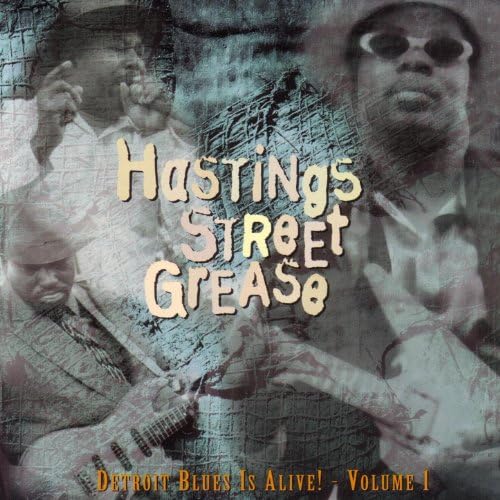
HASTINGS STREET GREASE : DETROIT BLUES IS ALIVE vol.1
Blue Suit
1998
Dans cette anthologie consacrée aux bluesmen de Detroit, Eddie Burns prend deux titres en leader : "Dixie boogie" et l'excellent slow blues "Stop lying".
In this anthology dedicated to Detroit bluesmen, Eddie Burns takes the lead on two tracks : "Dixie boogie" and the excellent slow blues "Stop lying".
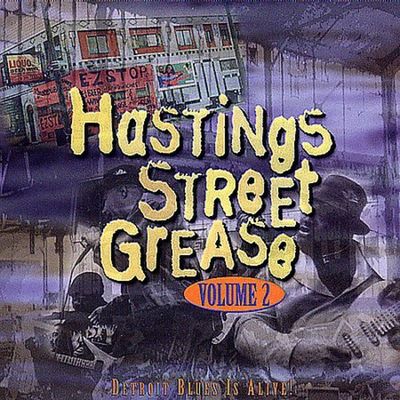
HASTINGS STREET GREASE : DETROIT BLUES IS ALIVE vol.2
Blue Suit
November 1998
On trouve ici une sympathique version live de "When I get drunk" avec le trombone de B.J. Emery.
Here you'll find a nice live version of "When I get drunk" featuring B.J. Emery on trombone.
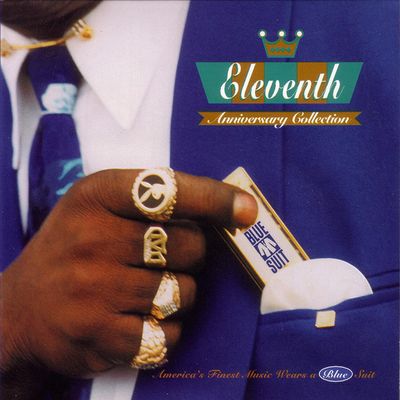
BLUE SUIT RECORDS ELEVENTH ANNIVERSARY COLLECTION
Blue Suit
November 1998
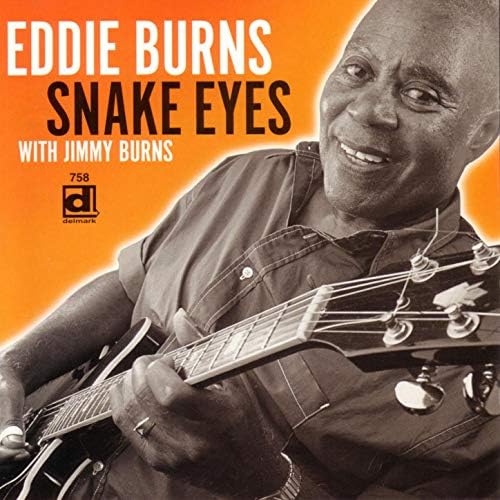
SNAKE EYES
Delmark
September 2001
Grâce à l'entremise de son frère cadet Jimmy Burns - qui enregistre déjà chez Delmark - Eddie trouve l'opportunité de graver un nouvel album pour le célèbre label. Même si sa voix semble parfois un peu limitée, il se montre toujours en forme à la guitare et à l'harmonica avec, derrière lui, un groupe solide (Jimmy Burns, Roosevelt Purifoy, Nick Charles, Larry Taylor). Dans ce programme consistant, on peut retenir "Night shift", "I call it love", "Jail time", "Goin' to New Orleans", l'instrumental "Hastings Street special", "Don't let money change you" et de belles reprises de "Your cash ain't nothin' but trash" et de "Lend me your love".
Thanks to the help of his younger brother Jimmy Burns - who was already recording for Delmark - Eddie found the opportunity to cut a new album for the renowned label. Although his vocals sometimes seem a bit limited, he remains in fine form on guitar and harmonica, backed by a solid band (Jimmy Burns, Roosevelt Purifoy, Nick Charles, Larry Taylor). Highlights of this substantial set include "Night shift", "I call it love", "Jail time", "Goin' to New Orleans", the instrumental "Hastings Street special", "Don't let money change you" along with fine covers of "Your cash ain't nothin' but trash" and "Lend me your love".
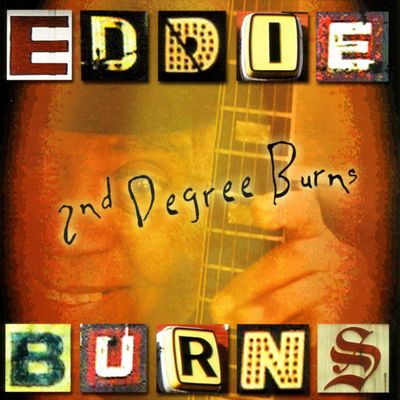
2ND DEGREE BURNS
Blue Suit
2005
Revenu chez Blue Suit, sous la supervision des producteurs Bob Seeman et John Rockwell, Eddie - 77 ans au moment de l'enregistrement - enregistre là son dernier album. Bien accompagné par son groupe régulier et son frère Jimmy, il donne une poignée de beaux morceaux comme "I'll always be around", "Hen pecked", "Fun time", "Jingling baby". Il se produit sur scène régulièrement jusqu'en 2008 mais une attaque à la fin 2011 le laisse très diminué. Il décède l'année suivante.
Back with the Blue Suit label and under the supervision of producers Bob Seeman and John Rockwell, Eddie — 77 years old at the time — recorded his final album. Well supported by his regular band and his brother Jimmy, he delivered a handful of fine tracks such as "I'll always be around", "Hen pecked", "Fun time", "Jingling baby". He continued to perform regularly until 2008, but a stroke in late 2011 left him severely incapacitated. He passed away the following year.